Against Convenience

The first and only time I truly participated in a democracy was on the top floor of a home for aged persons on Seattle's First Hill, staring at the incredible cosplay of the anime convention Sakura-Con hundreds of feet below, and trying to ignore an ex-boyfriend as he insisted on re-litigating why I broke up with him. That was almost exactly ten years ago.
Living in Montreal and talking to more and more non-Americans about the US political system has added some perspective. For its many, many quirks - the electoral college, the filibuster, DC being a weird fiefdom of Congress, etc - it is notable that each such oddity seems almost purpose driven to suppress or nullify mass participation at the community level. Almost like it was designed that way.
What do I mean when we say "participation"? I do not mean voting. Let's set aside the structural barriers - first-past-the-post, Senate appropriation, etc; all those things which render useless the vote of the vast, vast majority of Americans. Voting itself is an isolated, individualized, largely alienating experience. You stand in line. You enter a booth. You use some kind of device to vote, and then leave. Possibly with a sticker. You might also vote by mail.

But more importantly regarding democratic participation, there are simply things that cannot be voted on. Those on the left might point to war-making powers or universal healthcare, but even more critical structural questions of the political economy are off the table. For the better part of the American republic, the question of a national central bank and monetary policy was front-and-center. One of the most famous speeches of American political history is about the gold standard. Successive waves of legislation, culminating in the Federal Reserve Act of 1913, had (until recently) effectively depoliticized this issue. Taking it out of the political sphere generally. Not a topic of debate.
Gold buggery was and is not just a question of perverts obsessed with precious minerals. Constricting the money supply was a mechanism that drastically limited government intervention to resolve financial crashes and generally favored lenders e.g., the already wealthy. And, turns out, that is a very common feature in the American political system. Almost like it was designed that way.
When a majority of citizens disagrees with economic elites or with organized interests, they generally lose. Moreover, because of the strong status quo bias built into the U.S. political system, even when fairly large majorities of Americans favor policy change, they generally do not get it.
In 2014, professors Martin Gilens and Benjamin Page released Testing Theories of American Politics: Elites, Interest Groups, and Average Citizens. It measured key variables related to 1,779 policy issues for which there was polling that included data on the wealth of the participants and linked policy outcomes.
By contrast — again with other actors held constant — a proposed policy change with low support among economically-elite Americans (one out of five in favor) is adopted only about 18 percent of the time, while a proposed change with high support (four out of five in favor) is adopted about 45 percent of the time.
They followed up with a response to critics in the Washington Post (archive/non-paywall), just a couple of months before the rather consequential 2016 Presidential Election:
Many Americans voting for outsider candidates believe that government pretty much ignores people like them. We think they’re right.
Just two months before this fairly prescient response was published, a truly gorgeous day in Seattle marked the 2016 Washington State Caucus. The weather was very fortunate, as the turnout was such that the event spilled into parks after insufficient rooms were found to house them. You were assigned to groups according to your closest participating neighbors.
It was entirely by chance that I ended up dating, and then not dating, a man in the same building as myself in that same year. Limit OKCupid to queer (or queer friendly) nerds in a ~1km radius, even in a city of 700,000 people, and something like this is inevitable. It only became clear when he brought me home on a second date; dinner, drinks, and an invitation to watch an anime called Full Metal Alchemist. His desire to share this media to me was so sincere I had no choice to oblige. When I turned 30 I pledged to be less cynical, more open, try to say "yes" a bit more and experience more of life. That "you only get one" has never been particularly pithy but remains true.
Starting to date whomever I found attractive, regardless of gender, was part of that.
...
A caucus is a broad term used for any kind of meeting of people who have something political in common - they support a party, candidate, policy etc. A Democratic state caucus generally refers to the choosing of the presidential candidate by the people of that state in groups, with the Iowa Caucuses being the most well known.
Washington State more or less followed their process:
- Everyone stands in a part of the room based which candidate they support, with a group of undecided (or "uncommitted")
- Conversations happen. Frank, but respectful political conversations with your neighbors. Not as terrifying as it sounds! It's not the internet. You have to live near these people. Assholes are ignored or are asked to leave.
- Sometimes groups will deputize members to recruit more supporters. Sometimes uncommitted people will ask each group about their candidate. Political education happens.
- There was time allocated to allow for speeches to the full group.
- After some time, people stop milling around/joining/leaving groups, and a count starts.
- Groups that support candidates with too few supporters to win at least one delegate ("unviable") are asked to join the uncommitted group or move to their second choice.
- The process repeats until you run out of time or no one is moving around anymore.
You and your neighbors will pick delegates that will go on to do this process a few more times until, ultimately, statewide delegates are elected that will go to the national convention that picks which candidate to run for President of the United States.
It's a messy process. It takes time. But it isn't a voting booth. It's other humans. Neighbors. Asking questions. Learning things about the candidates. Expressing their needs and demanding answers. If you support a candidate you might have to defend them. Or not! Minority candidates are not invisible or ignored. It's entirely possible their delegates will reach even the statewide level and continue on to the national convention, influencing the ultimate decision. You will meet the neighbors you choose to represent you, directly and intimately.
Obviously, there are downsides.
...
Full Metal Alchemist did not keep my attention. The lean in to kiss was well received. The feeling of rough beard and soft lips. Sensitive necks and strong arms.
I was still inexperienced with men. With that inexperience came, despite my best efforts, a subconscious anxiety. He was overeager, desperate to please. An admonition regarding teeth was necessary. The use of fingers, an ask for more lubrication. An expressed desire to go further - in whatever role preferred - I had to deny. For me, this was already farther than I usually went on a second date - admittedly, he was not the only one overeager.
As I've found somewhat typical of gay romance, real talk happens after messing around. The tension has been broken. Inconvenient revelations of incompatibility cannot potentially ruin a good time. It's also the last impression before parting ways - a time to reflect on the nature of the relationship both desire. If any.
In that moment, he took the opportunity to try to impress. Swearing me to secrecy, he showed me the still-in-development Microsoft Surface. I decided there was no harm in acting impressed.
Incredibly, he was not the only romantic partner/Microsoft employee that sought to impress me in this precise way that very month. Another genuinely sweet man, only a little older than I, had invited me over for an appreciated but unremarkable dinner from a then-new service called Blue Apron. Before dinner he had me try on a Microsoft HoloLens - an augmented reality headset. Augmented reality was The Next Big Thing about four hype-cycles ago. I remember the experience being clunky but interesting. Nothing that would inspire a $3,500 purchase.
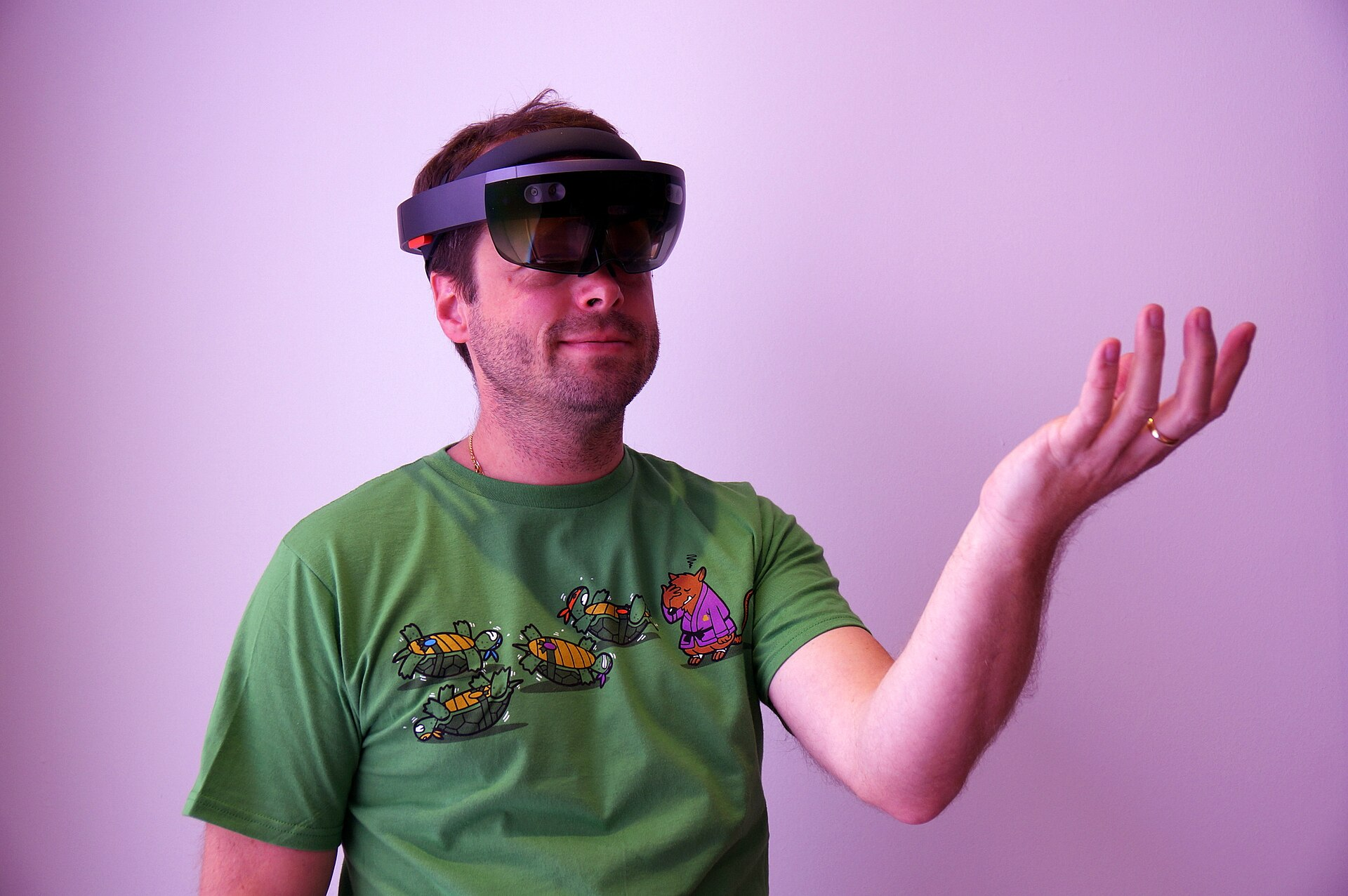
Microsoft has almost entirely handed off HoloLens to the military-industrial-grift complex, but it can be found in the wild, as was the case during my trip to Barcelona. I was overeager in this instance too, but to considerably more pleasant effect. Netflix and chill when it was still a meme. I maintain mutual oral sex is simply easier to accomplish with two men (or people with similar equipment). The fact that I did not understand Spanish made Narcos considerably less distracting.
...
"So what was it? I don't understand."
Keen eyed observers of history might note the similarities between how caucuses function - with smaller groups electing representatives up a pyramidal structure - with socialist worker councils. The term often used for these is a soviet. The Soviet Union was not the only one to use these - there were Irish soviets during the Irish War of Independence and Irish Civil War - but they were the principal rallying cry during the October Revolution. "All power to the soviets" was, of course, never realized. Not anymore than the real liberty desired by the men and women that fought in the American Revolution.
My neighbor and former brief romantic partner still had questions. I have long forgiven him for lying about his political preferences to garner more of my attention. He was not undecided or leaning toward Hillary Clinton. No one was. Washington State was a complete blowout for Bernie Sanders. By this time, the question of who the nominee would be was largely decided due to the late nature of the caucus. Our effect was not measurable in that way.
But I, too, was being evasive. That I simply had found someone with whom I enjoyed spending my time more with was the truthful, but cruel, answer. I doubt he would be any more satisfied to learn I'm still with that person ten years later.
His reluctance to let go was more explicable thanks to the post coital conversation. He had difficulty finding people to date because he was looking for a more serious relationship - not a common goal for many gay men in their 20s. His parents were considerably more supportive of his homosexuality than his not seriously caring if his partner was Jewish - so much so that they purchased a JDate subscription for him. This, as it turns out, had not been a particularly fruitful acquisition. He had successfully matched with one (1) queer Jewish man in Spokane a city no less than 5 hours away by car.
But sympathy is not the basis for a healthy relationship - sexual, romantic, or otherwise. We walked back to the same large, cheap, noisy apartment complex on Seattle's First Hill. There was no avoiding taking the same route. The awkwardness continued. I refused - in rapid succession - offers of sex and friendship. Neither seemed like a great idea at the time. This was confirmed by a few subsequent, but increasingly infrequent, texts revisiting the issue. I left them unanswered.
...
Ten years later and the notion of a functional, much less community oriented participatory democracy, is rapidly receding into the rear view mirror. The Washington State Democratic Caucuses we participated in was the last of its kind. It was expensive, inaccessible to those without means, and inconvenient.
Our system has been focused on convenience. Efficiency. There are things you don't even need to, cannot, vote for - like providing the means to deeply participate in communal politics. Conservative efforts to make it less easy to vote are simply an extension of this mentality. Your participation and effect on outcomes is so tenuous, what's another barrier? Not voting at all maximizes convenience and nothing could be more efficient.
James C. Scott's classic Seeing Like a State describes the many modernist efforts to make systems legible/transparent to those in power and how they fail. Efforts to maximize for timber board-feet per acre - something measurable - by planting monoculture forests, leading to mass tree die-off, is one of the more clear examples. The ecosystem was more than the trees. In the search for efficiency, all of the value has been lost. Not even the measurement is achieved. No board feet for anyone. The enemy body count in the Vietnam conflict grew, but the war was lost.
How many people vote is measurable. Talking with your neighbors, learning the issues, and producing an informed consensus is not. Inspiring the next generation of leaders or politically activating a population really isn't either. What value we should put on making democracy more than voting every couple of years, but rather a core practice in education, work, and community life? Sometimes doing the hard thing is worth it, whether it is a caucus or something else, even if it doesn't effect the immediate measurable outcome. Even if it means having to break up with someone all over again.